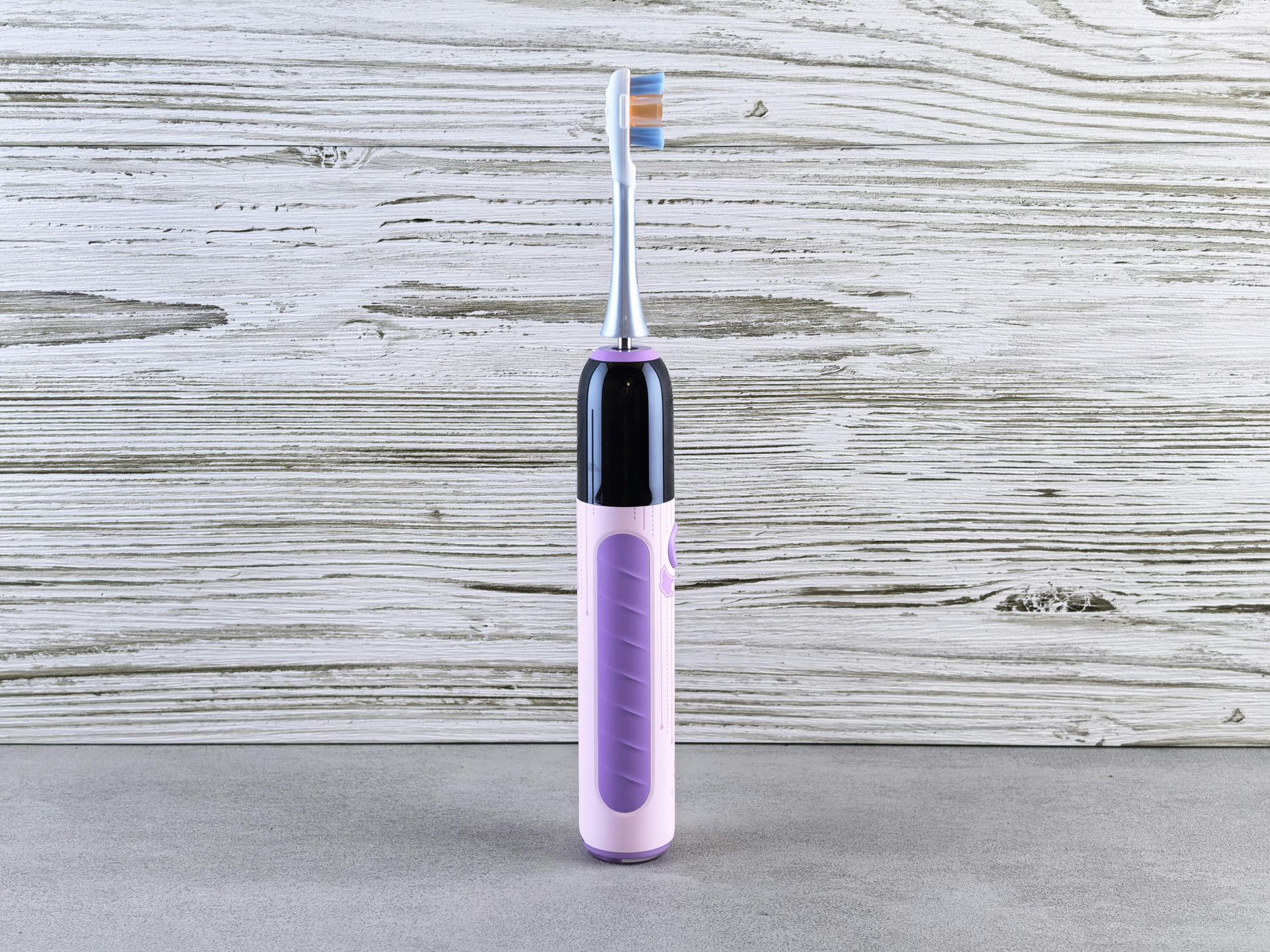
On one recent day, three separate patients came to Huszti Dental Care for their regular checkups with questions about electric toothbrushes. That gave us the idea for this post, because it seems there are a lot of misconceptions.
In general, the consistent sonic or oscillating motion of electric toothbrushes remove more plaque than brushing with a traditional toothbrush. That’s a good thing. But there are other major benefits that might make you consider investing in an electric toothbrush.
To begin with, they are gentler on the gums than traditional toothbrushes. How? Many of them have built in sensors that let you know when you are brushing too hard, a practice that can lead to gum recession and a reduction to enamel.
Another plus: Nearly all of them have built-in timers to encourage you to brush for the full two minutes recommended by the American Dental Association.
People with arthritis or other conditions that limit their dexterity find them very helpful because the brush does the work they can’t. And many come with different settings for deep cleaning, sensitive teeth or gum care.
But there are other considerations.
To begin with, most electric toothbrushes cost much more than a toothbrush you might pick up in a drug store or receive free from your friendly dentist. They range from around $40 and can cost more than $100. You will also need to purchase replaceable brush heads, which need to be changed a couple times a year, at a cost of less than $10 when purchased in bulk.
Then there is the issue of space. These are not convenient for people with small bathrooms or bathrooms without much counterspace, since they need to be charged and, depending on the model, that charger can be bulky.
They can also be inconvenient when you travel, because you may have to pack the charger as well.
Lastly, there are some people who don’t like the feeling of using an electric toothbrush.
Our advice is to try it, if you think you will benefit. Of course, you may be doing a good job on your own, and you might want to save that money. Ask us next time you’re in, and we can let you know what we think is the best option for you.